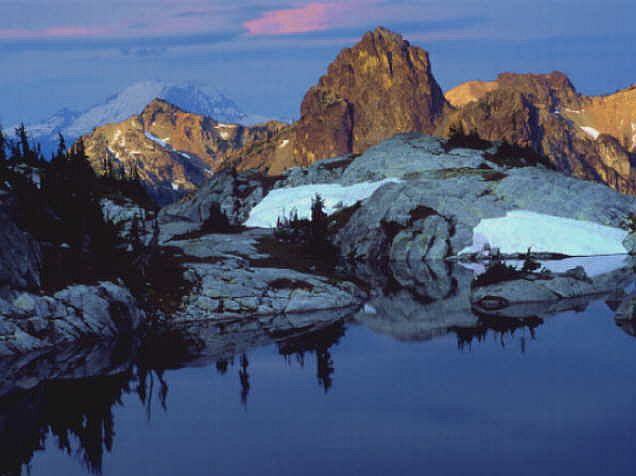
 This was the last movement to be completed as the opening section had a difficult time coming together. A lot of work was done in 2002 and 2003, and the first complete draft was finished on August 23, 2003. The structure of the third movement dates to the early 1980s. The music opens with the Gaia theme, and a major storm announces the onset of winter. The rain blows fiercely in the high gusts of wind. The rain evolves into a heavy snowstorm. This is followed by the migration theme from the second movement and a tragic version of the trek theme from the first movement. The Hymn to Nature theme is now heard in a minor key and concludes this section. The mood is that of gloom and despair. Any animal that was late in preparing for winter is now frantically trying to complete the job. The storms have subsided and all is quiet. There is no evidence of life anywhere. Snow covers everything and the sky is gloomily overcast. The only sound is that of a very cold breeze through the trees. The mood is sad and lonely. The protagonist contemplates why all the grandeur and life of summer has become an apparent wasteland. This is the most introspective music in the work. The music is simple and quiet consisting only of strings and a few woodwinds enter later as the desolation begins to take on a certain beauty. Although everything seems wrong there is something mysteriously very right about all of this. The very peaceful snow theme (composed in 1969) captures the tranquility of new snow falling in the pre-dawn hours and then into early morning. The gray sky gradually clears and the music becomes triumphant. A trumpet call announces that it is time to come out and play. The sun is brilliant and the mood is joyous and energetic as the animals and the protagonist frolic in the snow. The music is very rhythmic and crisp and has the quality of haunting the mind - it is very hard to let the theme and its subordinates go. To bring the hypnosis of the music to a close I used a brief form of the shift of rhythm method similar to how Jean Sibelius ended his Fifth Symphony (I have heard a number of criticisms of that ending and the first time I heard it I did not understand it either. But I later realized why Sibelius did it that way and his ending makes perfect sense.). Until the spring of 2003 only the opening call, first music, and closing bear waltz existed as all attempts to complete that section failed. But finally, I got the inspiration and that section turned out well. The mood is now of sad desperation. The music opens suddenly and harshly as the bitter cold and lack of food is taking its toll. The movement ends with the Gaia theme played with extreme dissonance representing cold desperation and death. The following are excerpts of the different parts for easy access. tron_movement3_part1.mp3 Score: tron_movement3_part1.pdf tron_movement3_part2.mp3 Score: tron_movement3_part2.pdf tron_movement3_part3.mp3 Score: tron_movement3_part3.pdf tron_movement3_part4.mp3 Score: tron_movement3_part4.pdf Back to the main The Revelation of Nature page Bottom of webpage |